
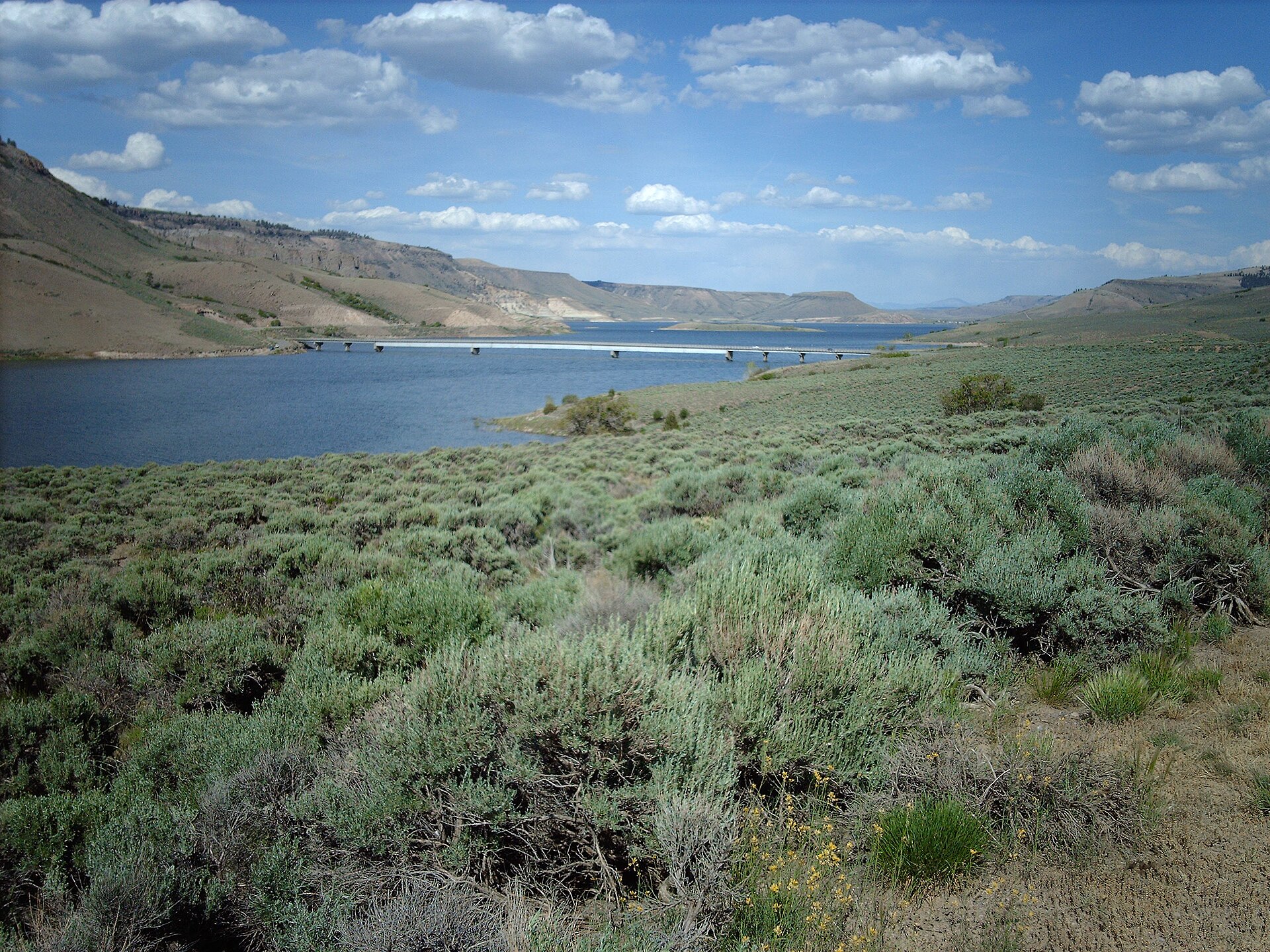
Go Big Blue
I am from the land of the blue grass, big blue skies, bluegrass on the ground and on the fiddle. When I moved to Colorado I had heard so many people talk about how beautiful it was. They must have meant outside of Denver. Don’t get me wrong, I actually like the city. But I remember Lexington actually having a little bit of outdoor beauty to it, depending on where you were. Now that I live in Colorado it feels like I have to drive an hour just to get to a real nature refuge. Don’t get me wrong the scale is entirely different, and the mountains are marvelous, the streams and lakes and reservoirs offer endless recreation (or did), and they even have a body of water that is dark blue. Now I love cheering for Big Blue, go Wildcats! But this was extra special to see, in a landlocked state, right outside of Gunnison, another beautiful place that I enjoy visiting, is a big ass body of deep blue water.
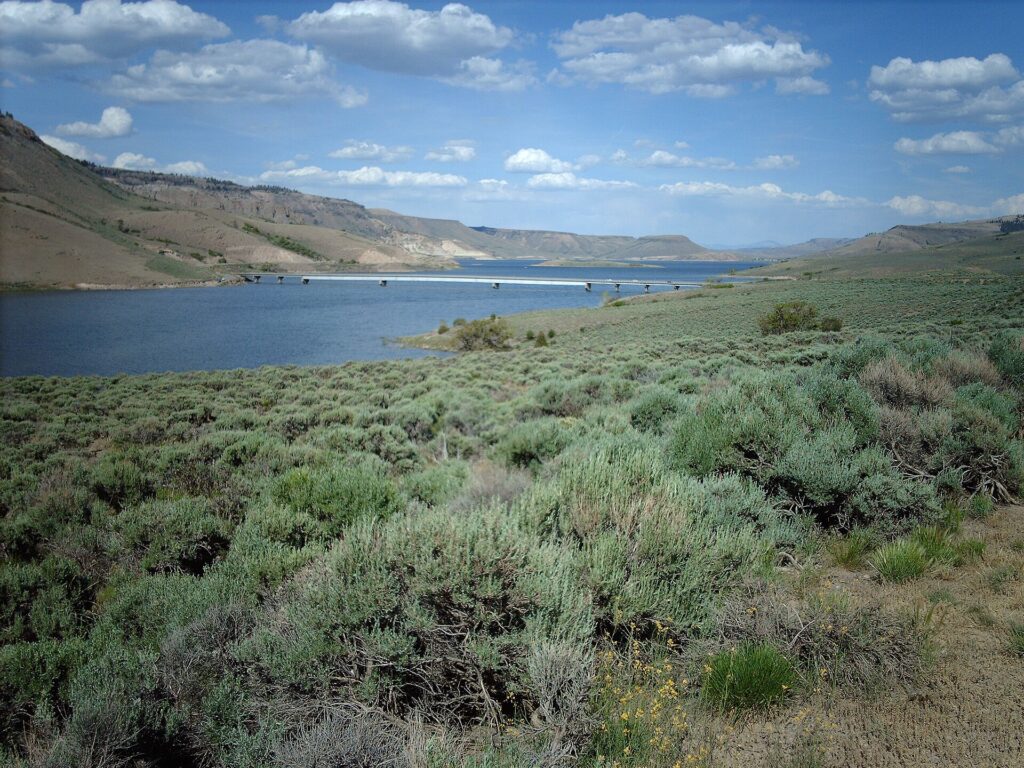
Anyway. Last summer it turned green.
Not green with envy for the ocean. Actual green. Toxic algae, the kind where the Park Service puts up a sign telling you to keep your dog out of it.
Aspen Journalism reported in January that low reservoir levels are the main cause of the harmful algal blooms at Blue Mesa, and that more water releases means more potential for further blooms. So the water goes down, the water gets poisoned, and the reason the water goes down has nothing at all to do with Gunnison County.
It has to do with a fight nobody in Colorado was invited to.
The short version
Blue Mesa is not really Colorado’s reservoir. I mean it is, it’s within our borders, the boats are (mostly) Colorado boats and the algae is Colorado algae. But legally it’s a federal facility. The Colorado River Storage Project Act of 1956 authorized the Wayne N. Aspinall Unit: Blue Mesa, Morrow Point, and Crystal. Along with Flaming Gorge in Utah, Navajo in New Mexico, and Glen Canyon in Arizona. Built so the Upper Basin could actually use its share of the river, and this is the part that’s about to matter a whole lot, built while assuring delivery of the Lower Basin’s full allocation.
You read that correctly, this massive body of water that exists in our state, our rainfall feeds into it, our wildlife drinks from it, was partly built as a promise to Phoenix.
And in July, the federal government cashed the promise.
What actually happened
Quick timeline, because the dates do the work here.
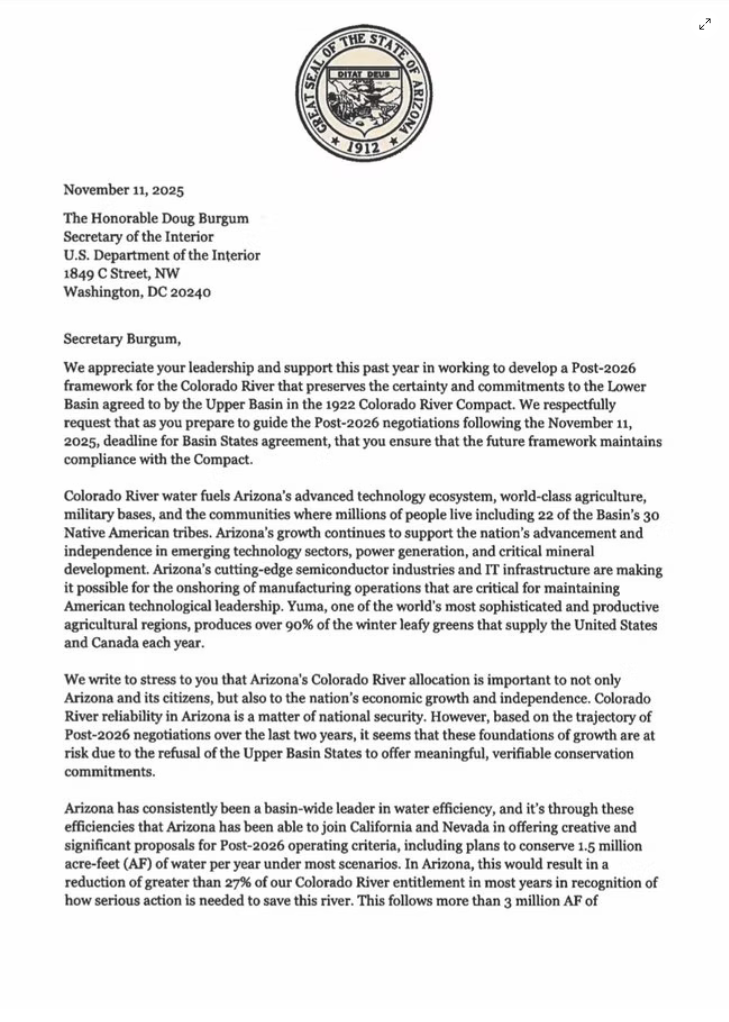
November 11, 2025. Seven states blow past a federal deadline to agree on how to run the river after the 2007 rules expire. Arizona’s governor goes to the press, which almost never happens in these talks, and says the Upper Basin refuses to commit to reductions and tells her negotiators it’s too complicated and impossible. Colorado’s negotiator Becky Mitchell fires back that heightened rhetoric is not helpful at this time.
January 2026. The feds stop waiting and put out a draft plan of their own.
March 2, 2026. Comment period closes. Reclamation gets 18,127 submissions, but only 785 of them are unique. Over 17,000 are form letters. (Why our form generator at https://civicduty.blaskattacks.com asks you to write your own unique section in it, and is tailored for each politician you are reaching out to based on their politics, committees they sit on, et cetera. The more you write your own story in there, the more likely they will take it seriously as a petition from a constituent.)
July 31, 2026. Final plan drops. It contemplates coordinated releases from Flaming Gorge, Blue Mesa, and Navajo to protect Lake Powell elevations. And it declines to resolve the competing legal interpretations of the 1922 Compact. That’s a polite way of saying the biggest legal question in the West got left for the lawyers to fight over later, after the water’s already been sold out from under us.
The states couldn’t agree, so the decision moved from a negotiating table to a federal comment docket. That switch matters more than anything else in this story and I’ll come back to it.
Arizona asked for this bullshit out loud
Arizona, California and Nevada pushed Reclamation to more fully evaluate coordinated releases from the Upper Basin reservoirs, arguing Congress authorized CRSP specifically to help meet downstream obligations during drought. Arizona told the agency those reservoirs “can and should be used.”
Fine. That’s a real legal argument and I’m not going to pretend it’s frivolous. However, I must politely respond, fuck you. Why aren’t we asking them to look internally before they demand we drain our reservoirs and negatively impact our environment and ability to provide for our people and generate power, and everything damn else that comes from the water? Instead we got lawyers arguing about why they should get our reserves, probably sent that email from a golf course and had a data center AI check it as it went out, just so they could waste an extra ten gallons of water in the process.
Arizona’s whole pitch is that its water is a national security issue. The November 11 letter to Interior Secretary Doug Burgum, signed by Governor Hobbs and legislators from both parties, says Colorado River water fuels Arizona’s advanced technology ecosystem, world-class agriculture, military bases, and that the state’s growth supports emerging technology sectors, power generation, and critical mineral development.
“Advanced technology ecosystem.” “Emerging technology sectors.”
The Colorado Sun read that and translated it in their coverage as data centers, which is almost certainly right. But go read it yourself, the Arizona House Democrats posted the whole thing: https://www.azhousedemocrats.com/post/secretary-of-the-interior-post-2026-colorado-river. It never says data centers. Not once.
Then in March, Arizona’s formal comments on the federal plan escalate to saying the proposal threatens to jeopardize national security priorities for the country. And last month, after a call with Burgum, Hobbs posts that Arizona produces the critical minerals, weapons defense systems and semiconductors that keep America safe. Safe from what? The biggest threat we have is our own politicians.
Nine months of turning up the national security dial. Still no data centers. Semiconductors, sure, and chip fabs drink like nothing else on earth, but the actual answer stays just off the page.
So what is it? If your water is so critical to the nation that the feds need to drain Gunnison County to protect it, why can’t you write down what it’s for? You wrote down “world-class agriculture.” You wrote down “military bases.” Why does that one category get the fog machine? And at this point I think its fair that we have a few demands of our own. If they want us to drain reservoirs to give them more water, they need to tell us EXACTLY what the water is for. If its a data center, who owns it, what are they processing, we should have access to building plans to see how its structured, we should be able to see where the water is going. If its agriculture, okay, what are they growing? Is it for export or does it stay domestic? Is it some corn product that will be turned into ethanol or corn syrup? We deserve to know why they want it, and furthermore weigh in on if we think it deserves the water or not.
Here’s the number nobody put in the letter
Water use for data center cooling in the Phoenix area alone is on track to go up 870 percent, from 385 million gallons a year to more than 3.7 billion, according to an analysis by the nonprofit Ceres. Bloomberg Intelligence models Arizona data center water demand jumping 67 percent, up to 5 billion gallons a year, from AI projects that are under construction right now.
Meanwhile Arizona is cutting 512,000 acre-feet in 2026 under a Level 1 Shortage. About 18 percent of what they get in a year.
And the finalized federal plan? It does not account for or even mention increased water use from data centers in either basin.
Sit with that. The plan that will run this river for the next decade, that puts our reservoirs on the table as a relief valve, that has already got Blue Mesa growing poison, that plan does not contain the words.
You cannot manage a demand you refuse to write down. That isn’t an oversight, that’s a choice somebody made.
One donor, most of the voices
Now here’s where it gets weird.
The Walton family, as in Walmart, is by far the biggest private money on the Colorado River. A Wall Street Journal analysis in 2021 found the Walton Family Foundation had put roughly $200 million over the prior decade into advocacy groups, universities, and media outlets involved in the river. Nobody else is close.
Their grantees include the Environmental Defense Fund, the National Audubon Society, and Trout Unlimited, plus The Nature Conservancy and Western Resource Advocates. They also fund the university center at CU Boulder that works on river operating rules. So the groups, and the people modeling the policy for the groups.
Now go look at who filed this joint comment letter on the federal draft plan, dated March 2, 2026: https://www.usbr.gov/ColoradoRiverBasin/post2026/draft-eis/docs/PublicComments/NGOs/AR-EDF-NAS-NC-TRCP-TU-WRA-007824-007878.pdf
American Rivers, Environmental Defense Fund, National Audubon Society, The Nature Conservancy, Theodore Roosevelt Conservation Partnership, Trout Unlimited, Western Resource Advocates. Seven groups. One letter. It’s sitting on Reclamation’s own website in the public file, anybody can pull it.
Seven groups.
One letter.
One donor.
All seven signed the same joint comment letter to the Bureau of Reclamation on March 2, 2026. Bars show only the Walton Family Foundation grants whose published purpose names the Colorado River. The figure underneath is what that organization has taken from Walton across every program, every year.
-
Environmental Defense Fund
-
The Nature Conservancy
-
National Audubon Society
-
Trout Unlimited
-
Western Resource Advocates
-
American Rivers
-
Theodore Roosevelt Conservation Partnership
The thin strip under each bar is that organization’s entire Walton relationship, broken into money the foundation described, and money it didn’t. The Colorado figures are floors, not shares: where two thirds of a grantee’s money carries no stated purpose, the record cannot tell you where it went.
The letter’s whole ask is that flexible tools are the linchpin of system reliability and should form the backbone of any framework. Conservation pools, savings pools, transactional water-sharing mechanisms that move conserved water across users, sectors, and locations. There’s an appendix arguing for a savings pool program in Lake Powell.
Then in July the final federal plan lands with storage of up to 8.0 million acre-feet of conserved water in Powell and 3.0 million in Mead, plus voluntary Upper Basin conservation up to 200,000 acre-feet, to allow incorporation of innovative water management solutions.
I’m not saying they wrote it. The 200,000 figure was floating around in the draft alternatives before that letter existed. What I’m saying is that when the states deadlock and the whole decision falls into a comment docket where only 785 out of 18,127 submissions are unique, the outfit that walks in with a fifty page technical filing and a concept paper stapled to it isn’t one voice among thousands. It’s one of maybe two dozen documents that move anything at all.
And here’s what I could not find anywhere in that letter. Data centers. The closest it gets is complaining that the federal analysis is primarily centered on agricultural production, farm income, and related employment, and asking for it to be broadened to municipal, industrial, and Tribal impacts.
Industrial use shows up a few times in the context of what happens to the broader economy when the water level is low. I hit control F a few times looking for it to talk about how much water industrial uses would need, if there was going to be demand from compute services, AI, data centers, et cetera. I didn’t find it. So they have to know its coming, they have to know there will be increased demand for water. And yet its not in your plans?
And the coordination is set up so you can’t trace it
There’s an outfit called the Colorado River Sustainability Campaign that coordinates a lot of these groups. E&E News reported back in 2019 that it had taken in at least $8.6 million since 2016, all of it controlled by three employees of something called the New Venture Fund whose identities it isn’t required to disclose. There’s no mention of the campaign on the New Venture Fund’s website or anywhere in its tax filings. Once the money goes in, it’s untraceable.
The campaign’s own director explained where it came from plainly enough. The foundation wanted somebody coordinating its grantees, so Walton funded the New Venture Fund to provide the staff.
Go to the campaign’s website and it’ll tell you the money comes from a diverse set of family foundations. It doesn’t name one. Not a single one. A diverse set of family foundations, which is a sentence that means absolutely nothing and took a communications person a full afternoon to write.
It’s still running, too. The Gates Family Foundation described it in a 2026 filing as coordinating among seven nonprofits.
Seven. Same as the letter. I have not confirmed it’s the same seven and I’m not going to say it is until I do.
And this is another place I think we get to make a demand. If your organization files on a federal docket that decides water for 40 million people, you disclose who funds you, in the filing, on the page. Not in a 990 somebody has to dig up eighteen months later. Right there where the public can see it. Lobbyists have to register. Campaigns have to report. But you can shape the operating rules of the entire Colorado River through a fiscally sponsored project whose staff nobody is allowed to name, and that’s just fine.
Two more things and then I’ll shut up, maybe
The revolving door of government to private sector of doom (allegedly) . Tanya Trujillo went from project director at that campaign straight to Assistant Secretary of the Interior for Water and Science, running Reclamation. Michael Connor worked as an environment program officer for the Walton Foundation before serving as Assistant Secretary of the Army for Civil Works from 2021 to 2025. Nothing illegal about either. That’s how Washington works, which is sort of the whole point.
Who covers this. Walton money also pays for the reporting, thats so convenient huh? Aspen Journalism got $100,000 a year for three years from the Walton Family Foundation, plus three years from Catena, a foundation run by another Walton. KUNC got three years for its water desk. CU Boulder’s Water Desk launched on a $700,000 Walton grant. The reporter whose river coverage had been Walton funded at KUNC since 2017 left in 2023 to go co-direct that Water Desk. Politico took $200,000 in 2018 and later ran a river feature quoting a Walton official without disclosing any of it.
And I want to be fair here, because this is where a lazier version of this post goes stupid. That Blue Mesa algae story I opened with is Aspen Journalism. A Walton grantee. Doing real, critical, local reporting that nobody else bothered to do. Funded doesn’t mean bought. It means the menu of questions gets shorter, and the ones that fall off the menu fall off quietly, and nobody in that room ever has to be a villain for it to happen.
So what’s the actual complaint
It’s not that a rich family cares about a river. Rich families care about rivers all the time, usually right up until the river costs them something, or they have used the last drop of it to make themselves money.
It’s that when one donor is paying the advocacy groups, the hub that coordinates the advocacy groups, the university shop that models the policy, and a good chunk of the reporters covering all of it, you don’t get a conspiracy. You get a consensus. And a consensus is a hell of a lot harder to argue with than a conspiracy, because everybody inside it is sincere.
The consensus is that water should move. Buy it off farmers, pool it in reservoirs, credit it, trade it, let it flow to whoever needs it most. Which sounds reasonable until you ask who decides what “needs it most” means, and you realize the answer is going to be whoever can pay.
Australia already ran this experiment on themselves. Their competition regulator found no evidence investors manipulated the water market, but it also pointed out that manipulating it isn’t actually against the law over there, and recommended a whole new water markets agency plus rules against manipulation and insider trading. They built the market first and went looking for a referee afterward.
We’re about to do eight million acre-feet of tradeable stored water with no referee at all.
And Blue Mesa pays for it
The federal government has done this before. Reclamation pulled 588,000 acre-feet out of Flaming Gorge in 2021 and 2022, and 36,000 out of Blue Mesa in 2021, and drought releases may be needed again in 2026.
So a lake in Gunnison County gets drawn down. The algae blooms. The Park Service puts up the signs. The marinas eat it, the guides eat it, the outfitters eat it, the towns that live off four months of summer eat it. Nobody in Denver notices and nobody in Phoenix ever hears about it.
And that water goes to Powell to keep the turbines spinning at Glen Canyon, and then downstream to a state that told the federal government its water is a national security matter because of an industry it will not put in writing.
Nobody planned that. That’s the fucking problem. It just works out this way, every single time, and the people it works out for never have to say so out loud.
You want to know why the states couldn’t agree? Because then they might have to put in writing what they actually want the water for. They say they need this many gallons, well why. Well I need to grow alfalfa to export to Saudi Arabia so they can feed it to their cattle. Or I need it to water our corn crops that we will then turn into ethanol, and then export it for sale. Or it’s for a data center, so META can analyze your smart glasses camera feed and watching you take a shit. Deadlock let everyone skip that part and hand it to a federal docket where the loudest, best lawyered filing wins by default. Colorado’s negotiator called Arizona’s rhetoric unhelpful. Arizona called Colorado immovable. And the fans in both states are out there screaming at each other about which side is greedier, football politics, same as it ever is, while the actual play runs in a comment folder on a government website that maybe four hundred people in this entire country have ever opened. If even that, for all we know a few of them were shaking hands later, job well done. Now none of us will get blamed for this and we will all do what we want to anyway.
But this is where we step up, and make a difference. It’s time to tell them we are tired of this shit. Call your state representatives and tell them you don’t care about data centers getting water. Tell them if they want to stay in office and not be voted out, that they need to protect our ability to have drinking water, to grow food that stays in our country, to have outdoor recreation. We have already destroyed these areas by building the dams, why the fuck are we draining them now? Make up your damn mind. I mean it’s not like we weren’t warned that building cities in the middle of the desert was a bad idea in the first place, but they are there now. Maybe human lives should take precedent over data centers and alfalfa for export. Maybe we should direct farmers to grow hardier crops that need less water. Maybe we rework how water is paid for so instead of tax payers paying for it three times we rework that so that the most wasteful and less needed uses of it pay the most, and people using it to drink or grow vegetables to be sold locally pay the least. There are sensible solutions here, but we never seem to want that. We have to chase the dollar until the resources are depleted, and then we say ” Why didn’t anyone plan for this?”
It’s all so very tiring.
~Blask
Sources
Aspen Journalism, “Low reservoir levels main cause of toxic algae in Blue Mesa,” Jan. 2026 — https://aspenjournalism.org/low-reservoir-levels-main-cause-of-toxic-algae-in-blue-mesa/
Colorado Sun, “Colorado River negotiators stumble past federal deadline without joint agreement,” Nov. 11, 2025 — https://coloradosun.com/2025/11/11/colorado-river-negotiators-stumble-past-federal-deadline-without-joint-agreement/
Letter from Gov. Katie Hobbs and Arizona legislators to Interior Secretary Doug Burgum, Nov. 11, 2025 (full text) — https://www.azhousedemocrats.com/post/secretary-of-the-interior-post-2026-colorado-river
Arizona’s formal comments on the Post-2026 Draft EIS, Mar. 2, 2026 — https://www.azwater.gov/sites/default/files/2026-03/2026.03.02_Arizona%20Post%202026%20DEIS%20Comments.pdf
Joint comment letter from American Rivers, Environmental Defense Fund, National Audubon Society, The Nature Conservancy, Theodore Roosevelt Conservation Partnership, Trout Unlimited, and Western Resource Advocates, Mar. 2, 2026 — https://www.usbr.gov/ColoradoRiverBasin/post2026/draft-eis/docs/PublicComments/NGOs/AR-EDF-NAS-NC-TRCP-TU-WRA-007824-007878.pdf
Bureau of Reclamation, Post-2026 Colorado River Operations, Final EIS and comment record — https://www.usbr.gov/ColoradoRiverBasin/post2026/index.html
Congressional Research Service R45546, “Management of the Colorado River” — https://www.congress.gov/crs-product/R45546
CEPR, “The Data Center Driven Drought Is Coming for the West,” Aug. 2026 — https://cepr.net/publications/the-data-center-driven-drought-is-coming-for-the-west/
Quartz, “AI data center water use collides with drought in the West,” May 2026 — https://qz.com/data-center-water-use-drought-american-west-051326
Bloomberg, “Colorado River Water Woes Threaten Arizona’s AI Boom,” Apr. 2026 — https://www.bloomberg.com/news/articles/2026-04-27/arizona-s-ai-boom-is-under-threat-by-dwindling-colorado-river
Engineering News-Record, “Reclamation Puts Dam Protection at Center of Post-2026 Colorado River Plan” — https://www.enr.com/articles/63422-reclamation-puts-dam-protection-at-center-of-post-2026-colorado-river-plan
The Nature Conservancy, statement on the state impasse, Feb. 2026 — https://www.nature.org/en-us/newsroom/colorado-river-impasse/
Bureau of Reclamation, Colorado River Storage Project overview — https://www.usbr.gov/uc/rm/crsp/index.html